
Why we exist
We started Qruiser Marine with a simple question:
Why should you have to choose between an RV and a boat?
For generations, families have packed up campers to explore the countryside or launched boats to enjoy life on the water. We believed there had to be a better way, a single vehicle that could comfortably travel by road, launch in minutes, and become your cottage on the lake.
That idea became the Qruiser RV Boat.
Every detail is designed around one purpose:
Adventure without limits.
Meet the Founder
Qruiser Marine was founded by Shawn Watling, an inventor and hands-on problem solver with more than three decades of experience solving complex mechanical and engineering challenges.
Throughout his career, Shawn has built a reputation for approaching difficult problems open mind, questioning conventional solutions, developing new ideas, and turning those ideas into practical, real-world results.
That same mindset is at the foundation of Qruiser Marine. The RV Boat began by questioning the limitations of conventional RVs, boats, and houseboats, and asking whether a fundamentally different approach could combine the best qualities of each.
Qruiser is the result of that approach: identify the problem, challenge conventional thinking, engineer the solution, and build it to perform in the real world.
A Lifetime of Building, Solving & Inventing — Timeline
The road to Qruiser Marine didn't begin with a boat. It developed through decades of hands-on mechanical experience, invention, motorsports, prototype development, and a continual drive to solve problems differently.
Early Years — Competition & Problem Solving

Awarded Athlete of the Year throughout high school, Shawn was known primarily for his athletic ability and competitive drive. He also discovered an unexpected aptitude for chess, winning both the Hastings County and Eastern Ontario Chess Championships before placing among the top competitors at the All-Ontario tournament.
These early achievements reflected a combination of competitiveness, analytical thinking, and determination that would later become central to his approach to problem solving, invention, and product development.
1992 — A Career in Mechanical Systems Begins

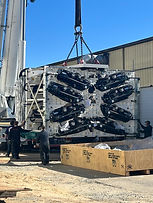
Began a millwright apprenticeship with the family business, building the hands-on mechanical foundation that would eventually lead to a career installing, aligning, troubleshooting, and developing complex mechanical systems.
2006 — First Patent: RAD Technology
Filed the first patent for RAD Technology — Rear Axle Drive, an innovative rear-drive snowmobile concept. It marked the beginning of a transition from solving mechanical problems for others to developing and protecting original inventions.
2008 — Discovery Channel's Daily Planet

RAD Technology attracted national media attention and was featured on Discovery Channel's Daily Planet, providing an early look at the technology and the thinking behind it.
2009–2011 — Presenting RAD Technology to the Industry
RAD Technology was presented to the four major snowmobile manufacturers with the goal of licensing the technology for production.

2009–2012 — Growing Industry Recognition
RAD Technology continued to attract attention through magazine features, online articles, interviews, and industry coverage.


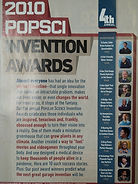

2010 — Popular Science • Invention of the Year
RAD Technology was selected for Popular Science's 2010 Invention Awards, recognizing ten innovative inventions from independent inventors.
Featured in the June 2010 “Inventions of the Year” issue, RAD Technology led the awards feature with “Faster, Safer Snowmobiling”—an in-depth look at Shawn's Rear Axle Drive system, its development, and the problem-solving process behind the invention.
2012 — From Engineering to the Racetrack

Engineering was put to the test in competition, earning two Eastern Ontario Ice Oval racing championships, including the Factory 600 class championship.
For the win!
2012–2016 — The RAD Tracker RT2

Mom helps with assembly

The next challenge was to take what had been learned through the development of RAD Technology's snowmobile suspension and drive systems and push the concept further.
The original idea was simple but unconventional: eliminate the skis and create a high-speed snowmobile that could operate year-round.That idea continued to evolve. What began as a year-round tracked vehicle ultimately became something much more ambitious—an amphibian capable of high-speed operation on both land and water.
RT2, the first RAD Tracker prototype, was born.
The project combined mechanical design, drivetrain development, fabrication, testing, and extensive problem solving to create an entirely new type of twin-track amphibious vehicle.
2015 — VRD Transmission Patent
Filed for a patent covering the VRD — Variable Ratio Differential, a first-of-its-kind all-mechanical transmission designed to achieve simultaneous speed and differential control—a capability not previously achieved with an all-mechanical automotive drivetrain.
The technology provided the precise track-speed control required for the continuing development and high-speed performance of RAD Tracker.
February 22, 2016 — RT2 Comes to Life


After years of design, development, fabrication, and problem solving, the first RAD Tracker prototype came to life.
RT2 was running.
2017–2025 — Developing the RT5

Nearly a decade of development followed with RT5, the second-generation RAD Tracker prototype.
The project expanded beyond mechanical systems into complete vehicle development, including composite panel construction, amphibious performance, durability, manufacturing methods, and extensive real-world testing.

2018 — Military Applications
Military presentations led to developing the RT5 platform for the DAME project requirements. An arctic mobility vehicle for the cold harsh Canadian climate.
August 22, 2020 — RT5 Comes to Life

At 1:07 a.m., after years of design, fabrication, setbacks, testing, and problem solving, the second RAD Tracker prototype came to life.
RT5 was running.
2022 — Ninth Patent Granted
A ninth patent was granted for “An Amphibious Multi-Terrain Water Planing High-Speed Tracked Vehicle,” representing another major milestone in the development and protection of RAD Tracker technology.
January 17–25, 2026 — The Idea That Changed Direction

RAD Tracker was exhibited at the Toronto International Boat Show.
Walking the show and studying all the watercraft, a new idea sparked to life.
The pieces began connecting: the tough composite-panel construction that made RT5 so light and strong, would be perfect for a boat, the ability to beach the vehicle without damage, the capability of high-speed, the living space of a houseboat, and the mobility of an RV. The full package!
The opportunity suddenly seemed obvious:
Why choose between an RV and a boat?
The concept for the Qruiser RV Boat was born.
February 15, 2026 — RT2 • Unofficial World Land Speed Record

At a public radar run event, RT2 reached 101.28 kph, surpassing the long-standing 82.2 kph benchmark set by a Scorpion tank for a dual-tracked vehicle.
The run was conducted using record-attempt procedures and witnessed by hundreds of spectators. Although not submitted for formal Guinness World Records certification, the achievement demonstrated something that had once seemed improbable: a dual-tracked amphibious vehicle exceeding 100 kph on land.
March 1, 2026 — RT5 Follows

Two weeks later, RT5 reached 98.6 kph, also surpassing the previous dual-tracked vehicle benchmark.
Together, the two independently developed RAD Tracker prototypes demonstrated the evolution of the technology—and the performance that can result from years of persistent development, testing, and problem solving.
2026 — Qruiser Marine
Decades of mechanical experience, invention, vehicle development, composite construction, prototype testing, and problem solving converge in a new direction.
Qruiser Marine.
The RV Boat isn't the beginning of the story.
It's the next evolution of it.
From RAD Tracker to Qruiser
RAD Tracker and the Qruiser RV Boat may appear to be very different vehicles, but they share much of the same DNA.
Years of developing RAD Tracker pushed vehicle design into demanding environments—land, water, rocks, shorelines, high speeds, and conditions where durability matters.
Along the way came lessons in composite-panel construction, lightweight structures, amphibious design, vehicle packaging, durability, manufacturing, and the importance of building something that can perform outside of controlled conditions.
Those lessons didn't stay with RAD Tracker.
They became part of Qruiser.
The RV Boat takes that experience in a completely new direction—combining the mobility of an RV, the freedom of a boat, and the comfort of a cottage into one trailerable platform designed for adventure.
Different vehicle. Same philosophy: build it to perform in the real world.
The Qruiser Philosophy
Build something worth owning.
Qruiser Marine was created around a simple belief: a great product should begin with solving the right problems—not following what everyone else is already doing.
We believe in thoughtful design, durable construction, continuous improvement, and building products we are proud to put our name on.
That means questioning conventional solutions. Testing ideas in the real world. Improving the details that matter. And never allowing “that's how it's always been done” to become the reason something can't be better.
We're not setting out to build the most boats.
We're setting out to build a better way to explore.
What's Next
Qruiser Marine is at the beginning of a new chapter.
The RV Boat brings together decades of experience, invention, testing, and product development—but what matters most is where it can take people next.
A campsite tonight. A quiet bay tomorrow. A different lake next weekend.

No cottage tying you to one shoreline. No traditional RV keeping you on land. No conventional boat determining where the adventure has to end.
Just the freedom to keep exploring.
Where will you wake up next weekend?
Qruiser Marine
Adventure without limits